

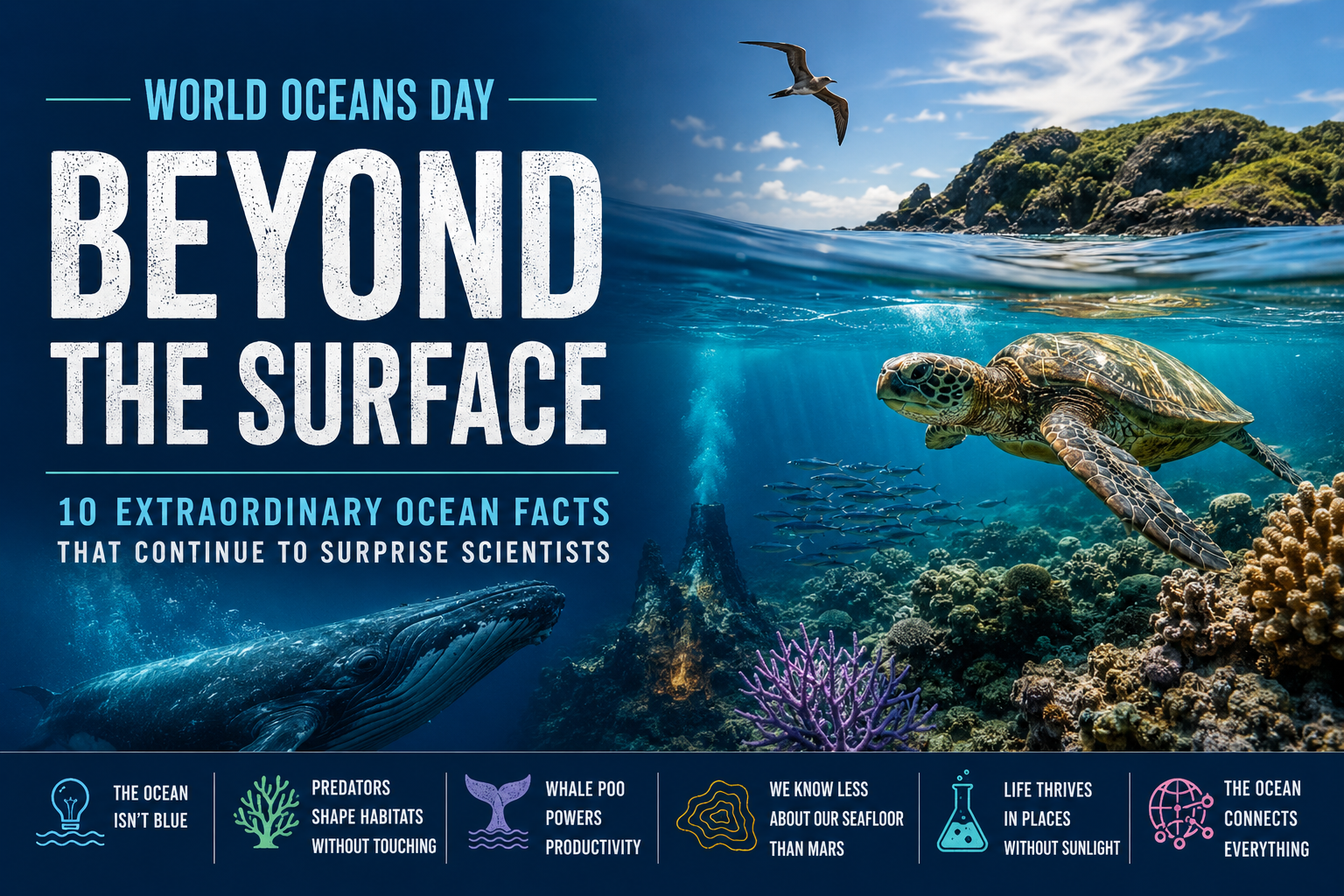
Every World Oceans Day serves as a reminder of just how extraordinary our oceans truly are.
The ocean regulates climate, supports biodiversity, sustains coastal communities, and connects ecosystems across the globe. Yet despite centuries of exploration, it remains one of the least understood environments on Earth.
Scientists continue to make discoveries every year that challenge assumptions, reveal hidden ecological connections, and deepen our understanding of life beneath the waves.
Here are ten fascinating ocean facts and discoveries that highlight just how remarkable—and mysterious—the ocean remains.
1. Predators Can Shape Entire Habitats Without Ever Touching a Plant
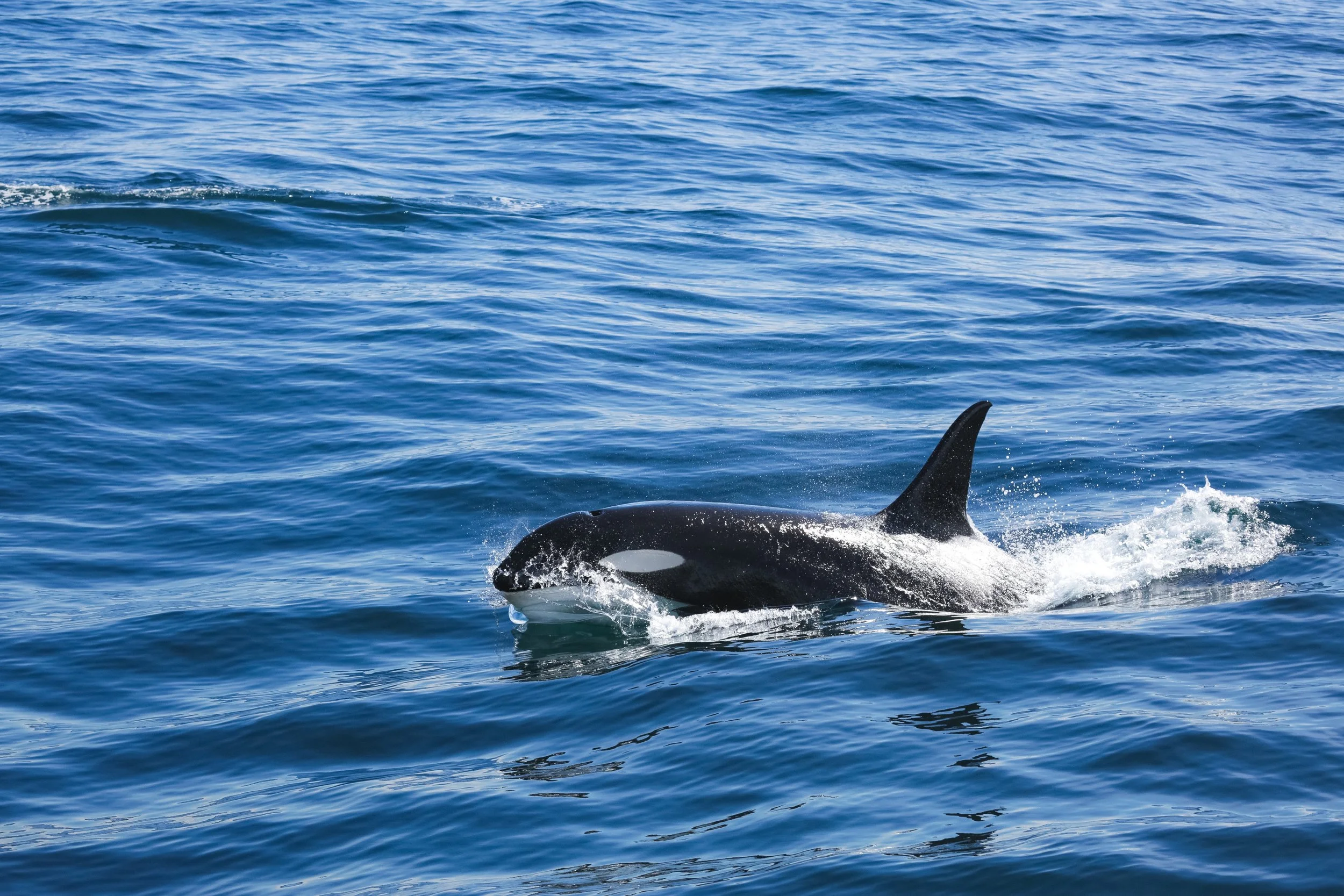
When people think about ecosystem engineers, sharks rarely come to mind.
Yet in some coastal ecosystems, large predators influence where herbivores choose to feed. Sea turtles and dugongs often avoid areas where predation risk is highest, creating natural refuges where seagrass can recover and thrive.
The result is a powerful ecological ripple effect. By influencing animal behavior, predators can help shape the structure and health of entire habitats.
2. Whales Help Fertilize the Ocean
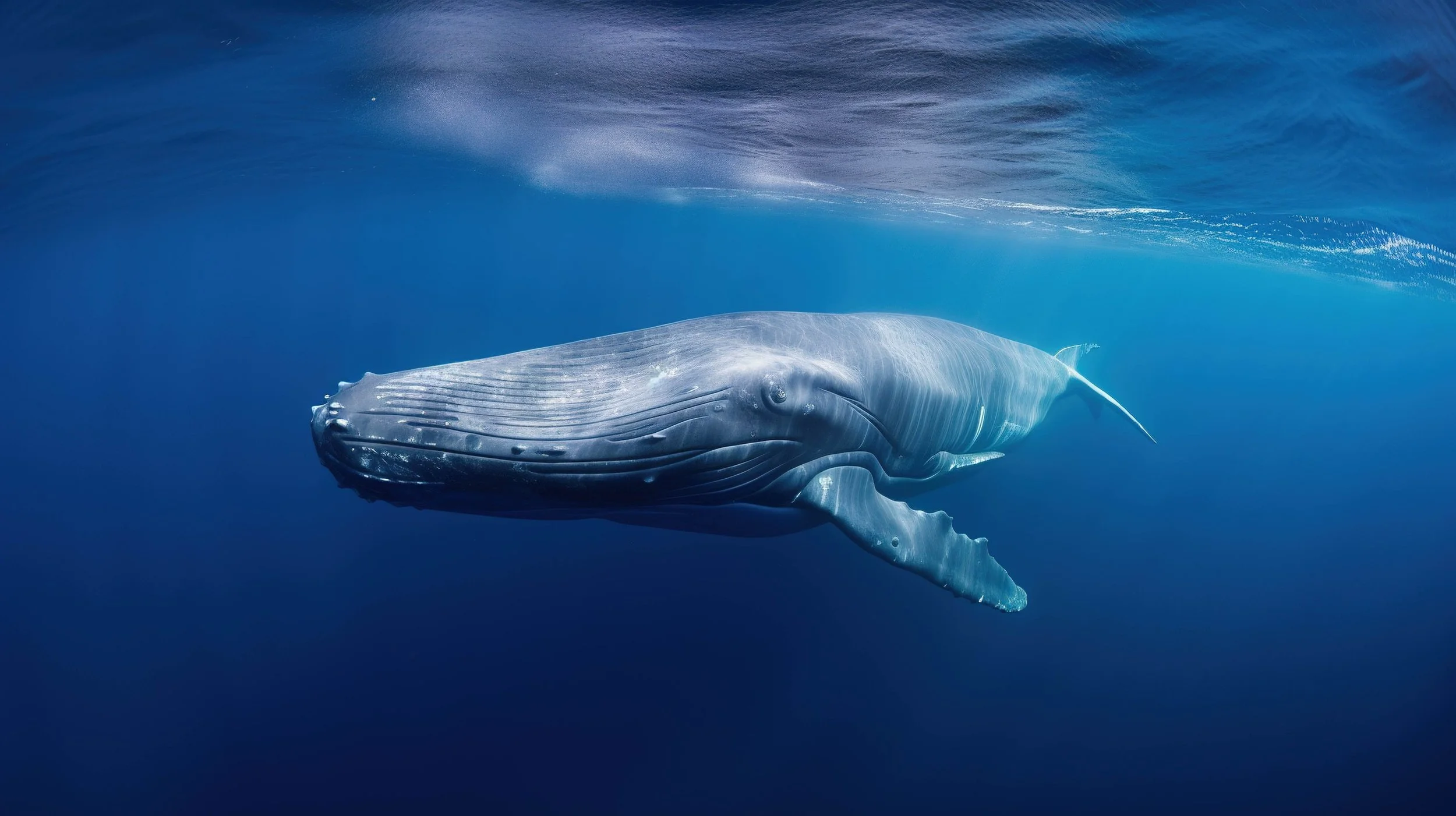
Whales are more than iconic marine mammals-they are nutrient transport systems.
Many species feed at depth and return to the surface to breathe. In the process, they release nutrients such as nitrogen and iron into sunlit waters where microscopic phytoplankton can use them.
This process, often called the "whale pump," helps support the productivity of marine food webs and demonstrates how interconnected ocean ecosystems truly are.
3. Coral Reefs Are Biodiversity Powerhouses
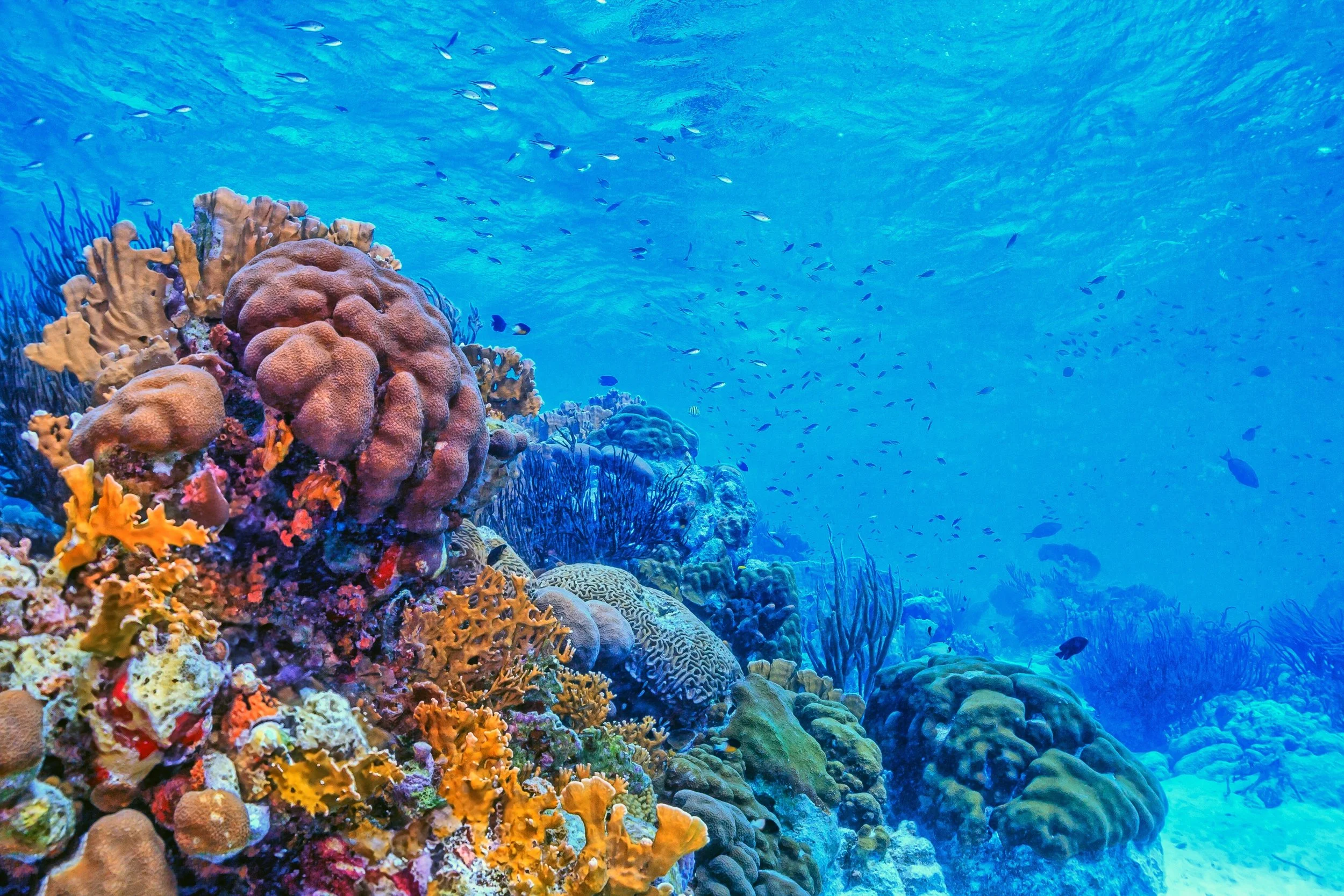
Coral reefs occupy less than one percent of the ocean floor, yet they support an astonishing amount of marine life.
Thousands of species depend on reef ecosystems for food, shelter, reproduction, or protection during critical life stages.
Often called the "rainforests of the sea," coral reefs remain some of the most biologically diverse environments on Earth.
4. The Deep Sea Is Full of Life
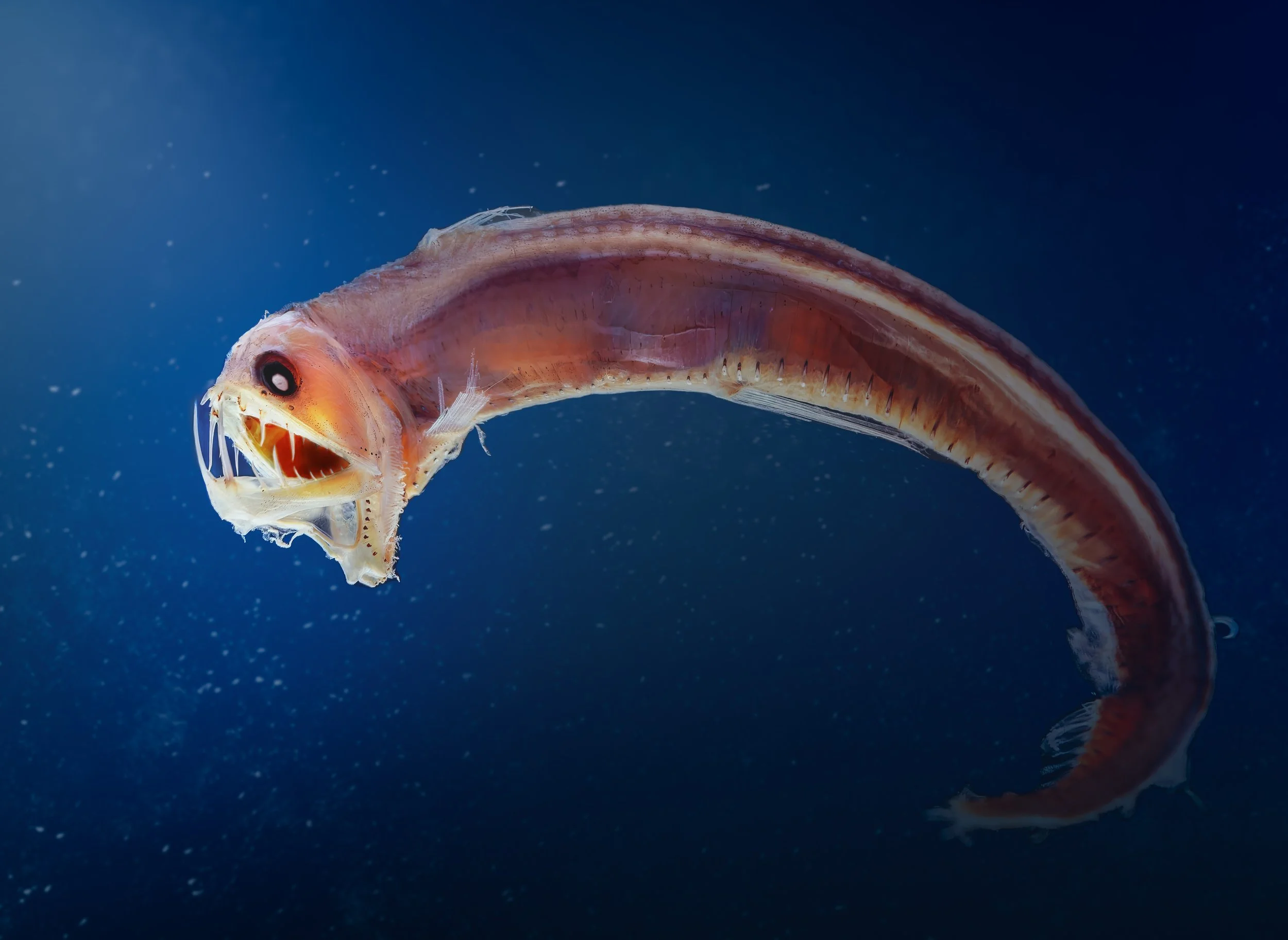
For years, deep-sea environments were thought to be relatively barren.
Today, scientists know that the deep ocean contains thriving ecosystems, including communities surrounding hydrothermal vents and methane seeps.
Some of these organisms survive using chemosynthesis-a process that derives energy from chemical reactions rather than sunlight.
Entire ecosystems exist in complete darkness, challenging traditional ideas about where life can thrive.
5. Sharks Have Been Around Longer Than Trees
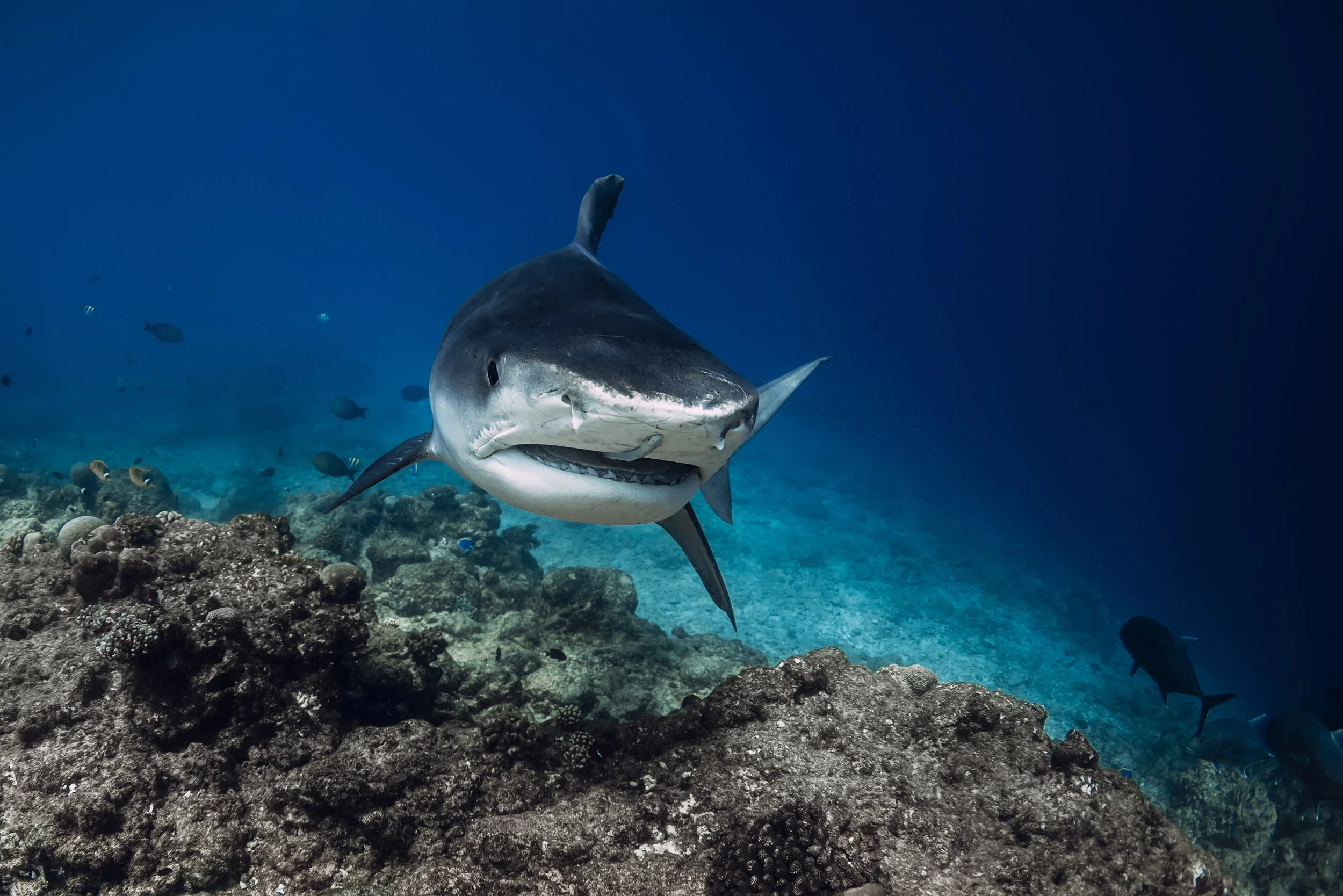
The earliest shark ancestors appeared more than 400 million years ago.
For perspective, trees did not appear until roughly 350 million years ago.
Over hundreds of millions of years, sharks have survived multiple mass extinction events while continuing to evolve into the incredible diversity of species found today.
6. Mangroves Are Natural Coastal Superheroes
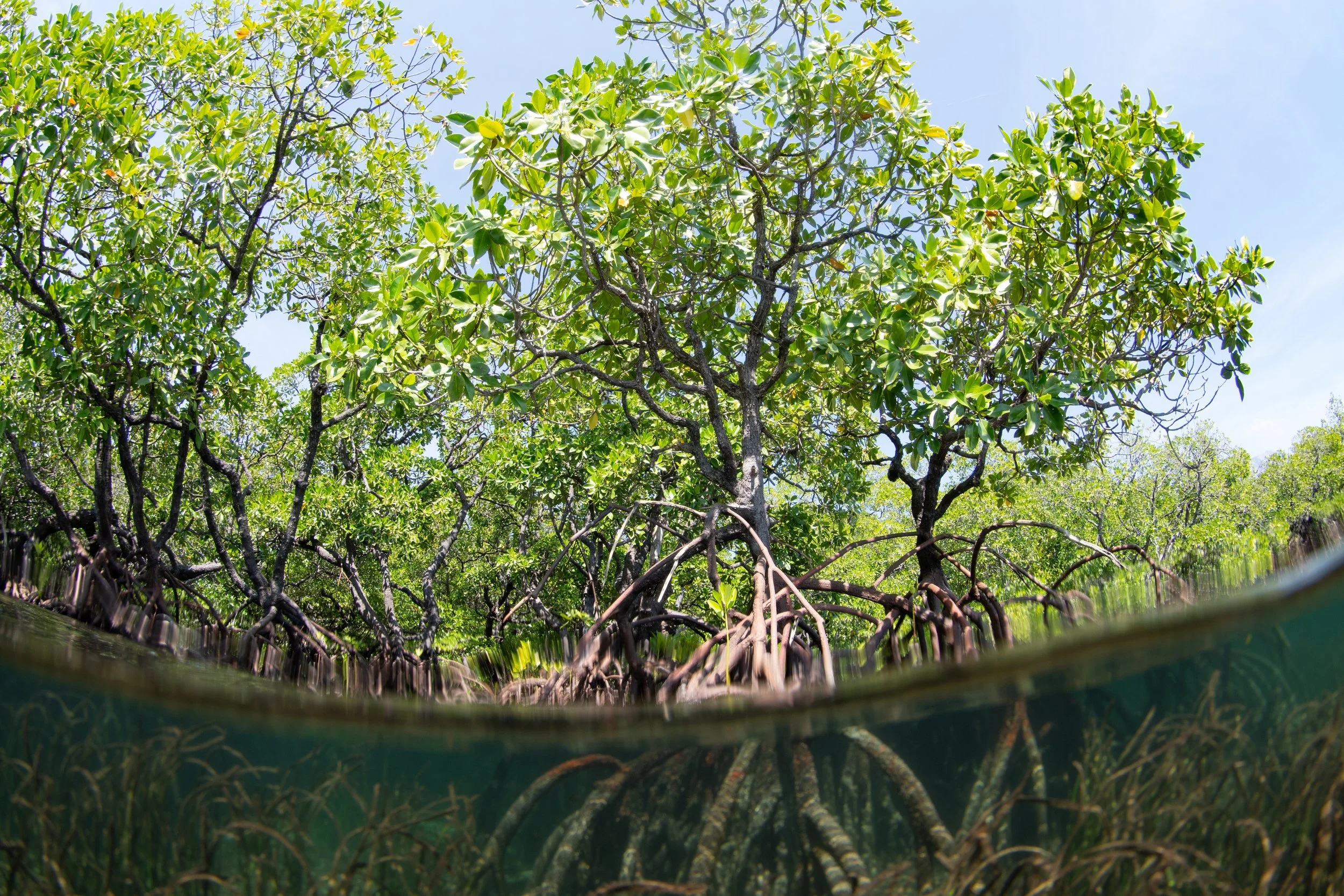
Mangrove forests perform an impressive number of ecological jobs simultaneously.
Their roots stabilize coastlines, reduce erosion, provide nursery habitat for juvenile marine life, improve water quality, and store large amounts of carbon within their sediments.
Many fish, rays, and shark species spend critical early life stages among mangrove roots before moving into larger coastal ecosystems.
7. The Ocean Connects Distant Places in Surprising Ways
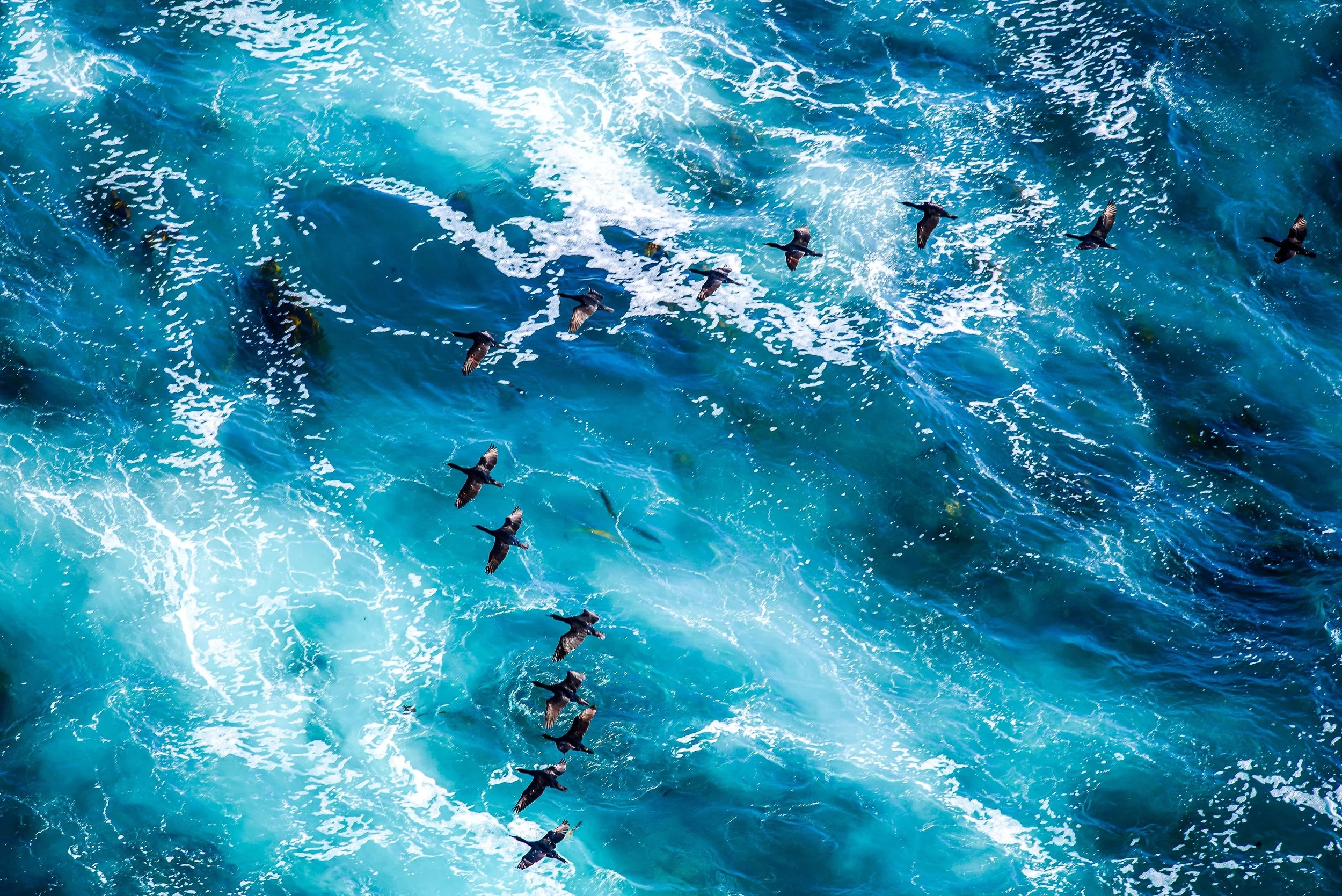
A shark tagged in one location may travel hundreds or even thousands of miles.
Sea turtles can nest on one shoreline and forage in waters belonging to another country. Ocean currents transport nutrients, larvae, and organisms across vast distances.
What happens in one region of the ocean can have effects far beyond local waters, making conservation a truly global effort.
8. New Marine Species Are Discovered Every Year
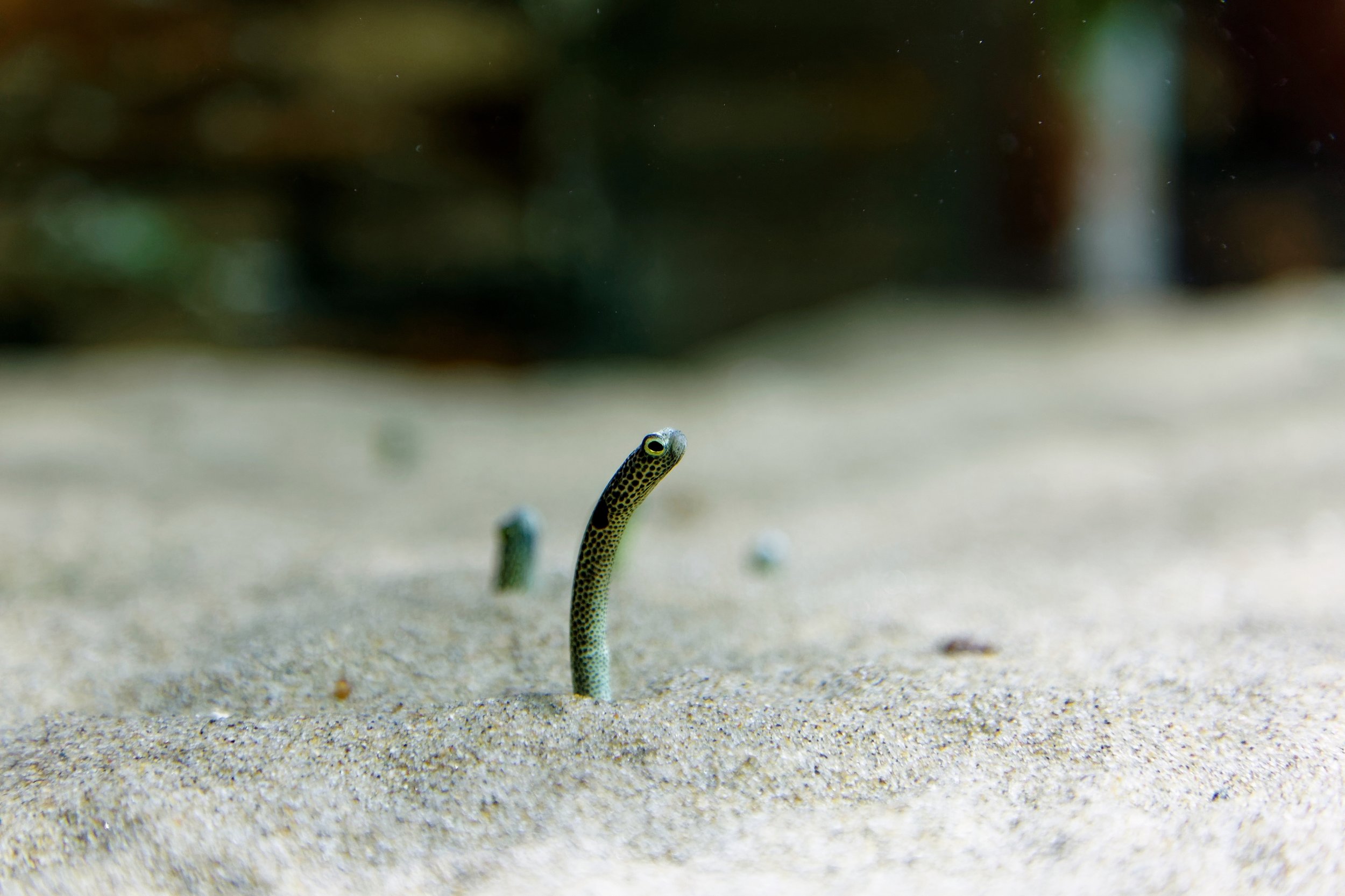
Despite modern technology, scientists continue to discover new species throughout the world's oceans.
Some are found in deep-sea habitats, while others are identified in coastal environments that have been studied for decades.
Each discovery serves as a reminder that the ocean still holds countless secrets waiting to be uncovered.
9. Not All Ocean Exploration Happens in the Deep Sea
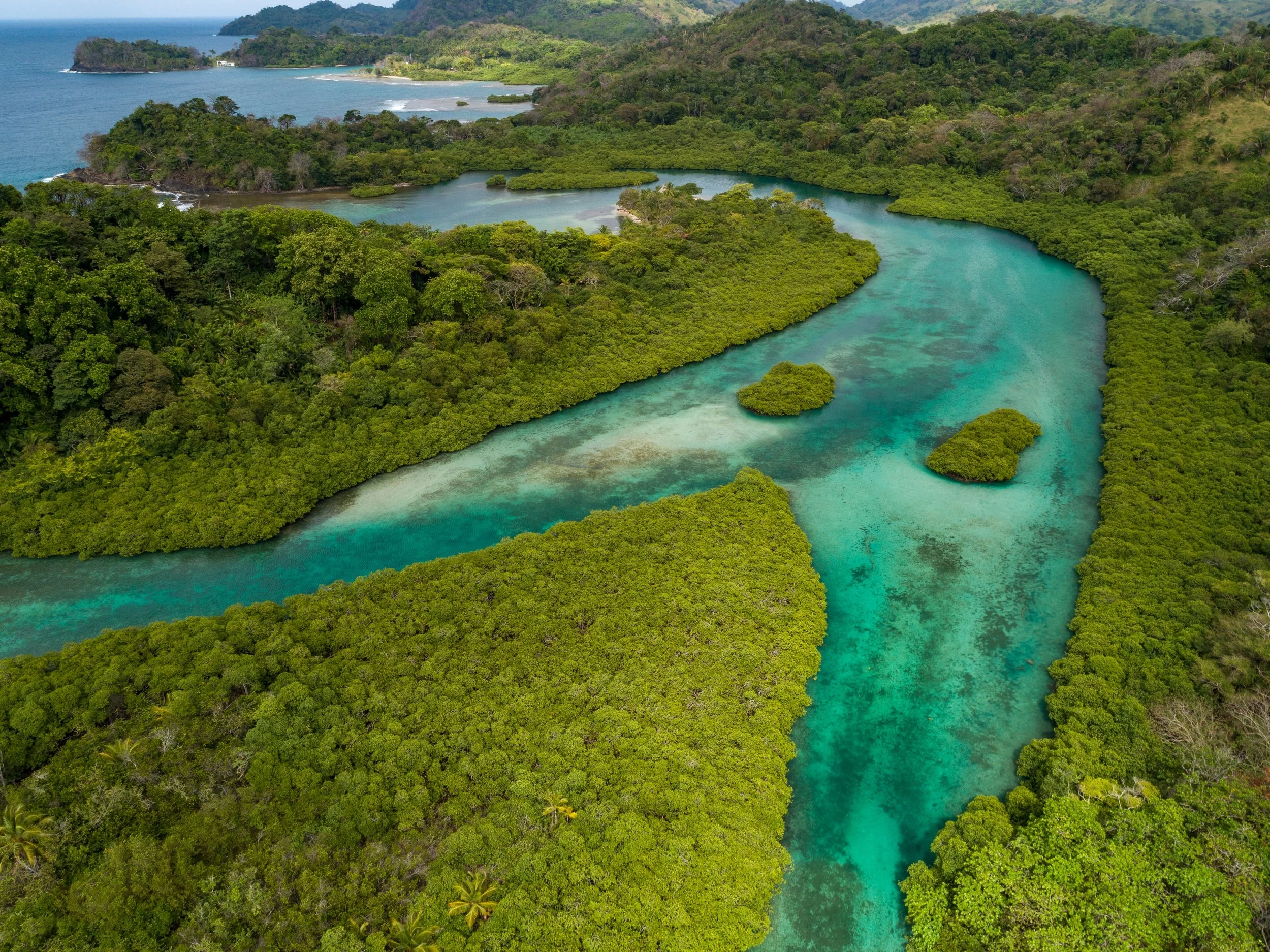
Many discoveries occur in surprisingly familiar places.
Researchers continue to uncover new behaviors, migration patterns, nursery habitats, and ecological relationships in coastal waters around the world.
Sometimes the next major discovery is not hidden in the deepest trench-it is waiting in a local estuary, mangrove forest, or seagrass meadow.
10. The Ocean Remains One of Earth's Greatest Scientific Frontiers
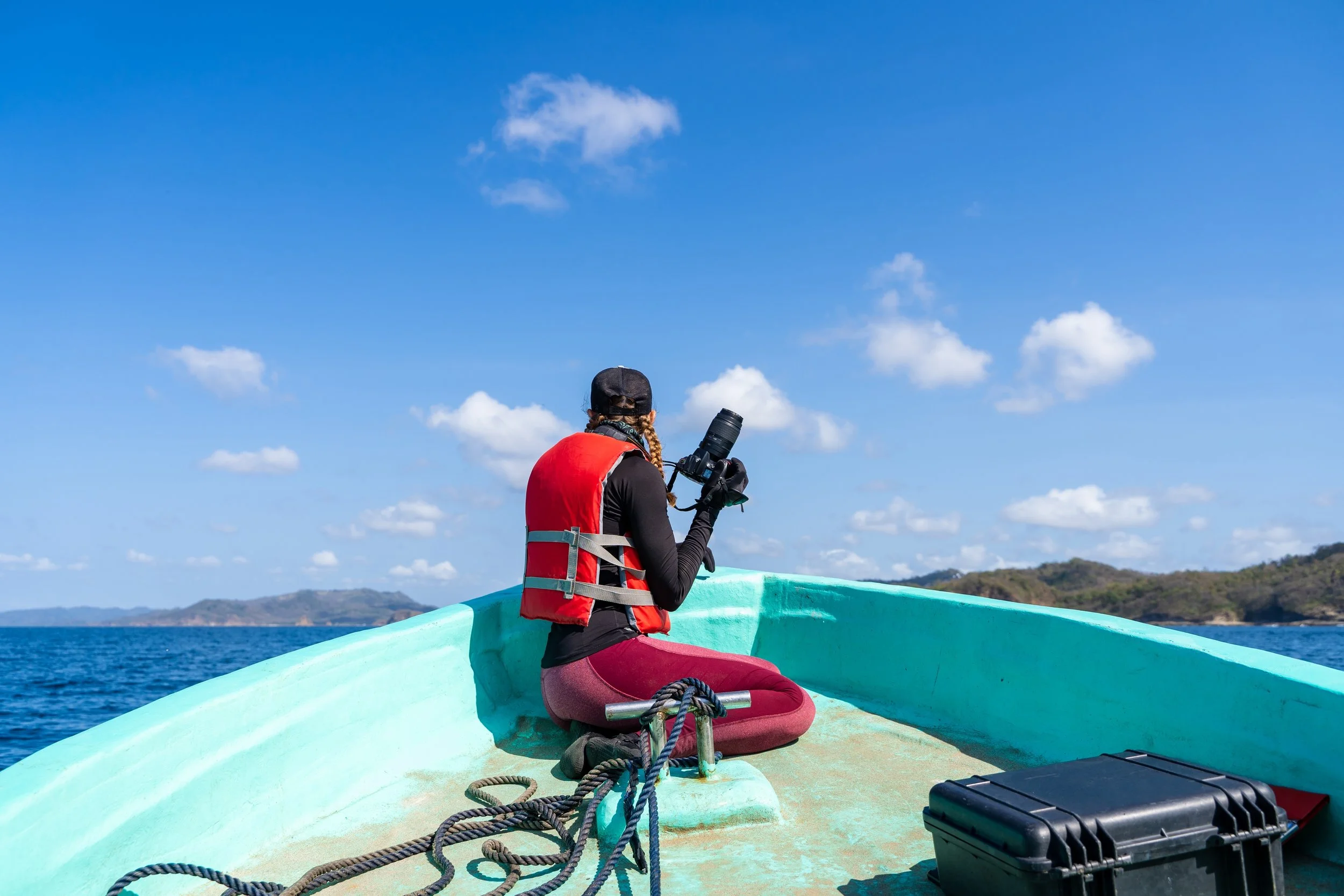
Perhaps the most remarkable ocean fact is how much remains unknown.
Scientists are still working to better understand species distributions, migration routes, ecosystem interactions, ocean chemistry, and deep-sea biodiversity.
Every expedition, field survey, and research project adds another piece to a puzzle that is far from complete.
The ocean is not simply a place that has been explored.
It is a place that is still being discovered.
Why It Matters
Understanding the ocean is about more than satisfying curiosity.
Healthy oceans support biodiversity, fisheries, coastal economies, climate regulation, and countless ecosystem services that benefit life across the planet.
The more that is learned about how marine ecosystems function, the better equipped scientists, conservationists, policymakers, and communities become to protect them.
The Takeaway
World Oceans Day is an opportunity to celebrate not only what is known about the ocean, but also what remains to be discovered.
From ancient sharks and nutrient-cycling whales to hidden deep-sea ecosystems and unexplored seafloor habitats, the ocean continues to inspire questions, discoveries, and wonder.
And perhaps that is one of its greatest gifts: reminding us that there is still a great deal left to learn beneath the surface.
